
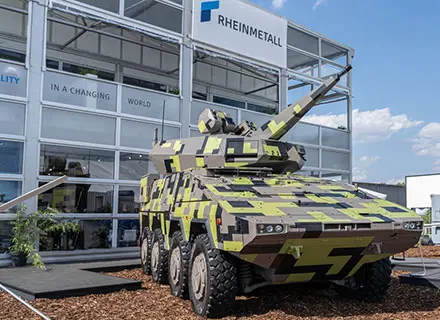

For years, defence stocks sat in the unfashionable corner of European investment portfolios, weighed down by ESG mandates that treated arms manufacturers much like tobacco or coal. That era is over.
A sector once shunned by mainstream capital has become one of the most sought-after asset classes on the continent, with a wave of initial public offerings turning tank makers, munitions suppliers and drone manufacturers into some of 2026’s hottest stock market debuts.
A sector reborn
The shift traces back to Russia’s invasion of Ukraine in 2022, but it has accelerated sharply through 2025 and 2026. The Stoxx Europe Total Market Aerospace & Defense Index climbed over 12% between the start of the year and early January, with this small basket of European defence stocks significantly outperforming the Nasdaq 100 despite the global enthusiasm for AI.
Germany’s Rheinmetall, the tank maker whose valuation has risen astronomically since 2022, gained almost 20% since the start of the year alone.
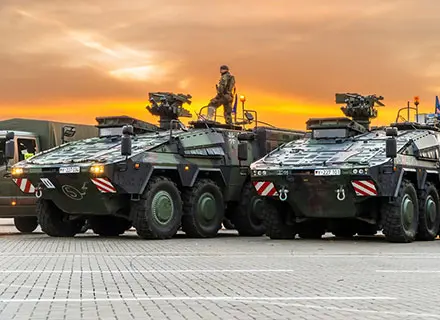
What makes 2026 different is not just share price performance but the sheer scale of new listings hitting the market. Industry analysts describe 2026 as the year European defence equity markets scaled into a mainstream institutional asset class, in terms of deal size, geographic spread and how deep into the supply chain the listings reach.
Where earlier offerings tested investor appetite cautiously, 2026’s listings span ammunition, power electronics, land systems and drones, covering the full range of European military procurement.
Even long-standing sceptics are changing their stance. Norway had been reviewing whether to let its sovereign wealth fund invest in certain defence businesses, a move that would reverse a 21-year ban, while several global tier-one investors have been relaxing their own restrictions to allow greater capital into the sector. As one ECM investor put it, defence has become too significant a theme to sit out for ESG reasons alone.
KNDS leads the charge
The headline listing of the year is KNDS, the Franco-German maker of the Leopard 2 and Leclerc battle tanks. The company has rolled out plans for a dual listing in Paris and Frankfurt, coming as European military budgets surge amid the war in Ukraine and doubts over America’s reliability as a security guarantor.
Germany is taking a 40% stake in KNDS to secure long-term influence over what it considers a strategically important company, while France, which currently owns half the firm, is reducing its holding to match Germany’s at 40%, leaving around 20% of shares to float on the market.
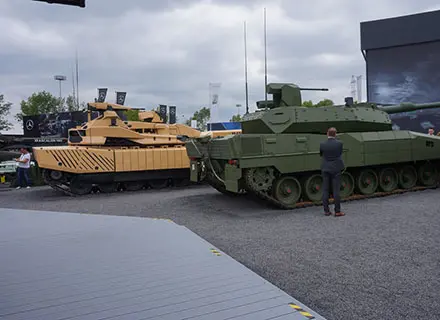
The numbers involved are substantial. Media reports have put KNDS’s valuation between 15 billion euro and 18 billion euro, down from earlier estimates closer to 25 billion euro, with the firm targeting between 11 billion euro and 12 billion euro in annual revenue over the medium term, up from 4.4 billion euro in 2025.
KNDS carries a 33.1 billion euro order backlog, representing more than seven years of revenue, and while its structure leaves only a fifth of shares in public hands, investors who value programme depth and guaranteed sovereign demand over pure liquidity see the entry price as a discount against listed peers.
CSG sets the record
If KNDS is the strategic heavyweight, Czechoslovak Group (CSG) has already claimed the scale record. CSG’s Amsterdam listing valued the ammunition supplier at 25 billion euro and raised 3.8 billion euro, making it the largest pure-play defence IPO ever recorded anywhere in the world.
Shares closed 31% above their offer price by the end of the second day of trading, a debut strong enough that bankers were watching it as a bellwether for the rest of Europe’s defence and technology IPO pipeline.
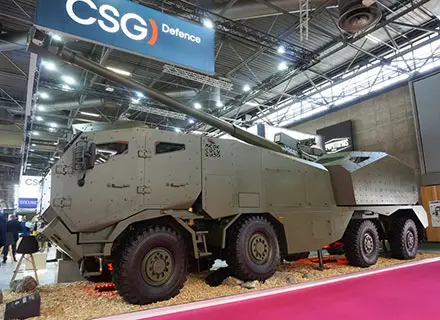
The story since has been more turbulent. CSG became the target of a short-seller attack in May 2026 and its shares have since fallen roughly 28%, a reminder that the path from IPO to lasting value is rarely a straight line, particularly in a sector where sentiment can move faster than order books.
Analysts point to this volatility as a sign the market is maturing rather than cooling. The diverging trajectories of CSG and fellow 2026 debutant Vincorion, which has stayed roughly flat against its issue price, suggest governance, free float and operational transparency are now being priced into deal design far more carefully than in 2024.
The rest of the pipeline
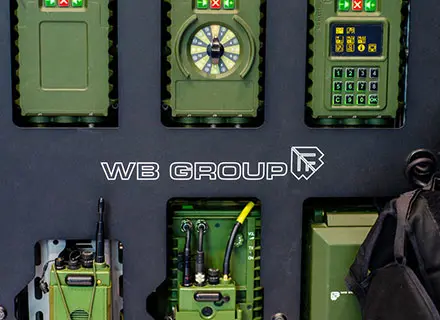
KNDS and CSG are the biggest names, but they are far from alone. WB Electronics, Poland’s leading maker of drones and loitering munitions, is expected to list in Warsaw in late 2026 or early 2027, combining the twin investment themes of defence technology and eastern European security, and benefiting from Poland allocating the highest share of GDP to defence of any NATO member.
This year’s boom builds on foundations laid earlier in the decade. Hensoldt, the German defence electronics business spun out of Airbus’s sensors division, listed in Frankfurt back in September 2020 at a valuation of around 3 billion euro, though it attracted only modest attention at the time given the pandemic and a defence spending outlook that had not yet turned.
That listing has since been followed by RENK and Exosens in 2024 and TKMS, the naval systems arm of Thyssenkrupp, in 2025, each building the case for defence as a legitimate long-term equity story. Shares in RENK, Theon International and Exosens have all climbed well above their debut prices since listing, reinforcing investor confidence that this is more than a one-off spike.
Why governments and markets are aligned
The commercial logic behind the boom rests on political commitments that show no sign of easing. At the Hague summit in June 2025, NATO allies committed to invest 5% of GDP annually on core defence and security-related spending by 2035, in response to the long-term threat posed by Russia and the persistent threat of terrorism.
That target splits into two parts, with at least 3.5% of GDP going to core defence requirements and NATO capability targets, and up to 1.5% covering broader security spending such as critical infrastructure protection and strengthening the defence industrial base.
Progress is already visible in the numbers. Updated NATO estimates released ahead of the July 2026 Ankara summit show five members, Lithuania, Estonia, Latvia, Poland and Greece, are on track to exceed 3.5% of GDP on core defence this year, while European allies and Canada together are projected to average 2.53%.

Rutte has highlighted that European allies and Canada have collectively spent an additional USD 1.2 trillion on defence over the past decade, including a 20% jump between 2024 and 2025 alone, and that Germany, now Europe’s largest defence spender, plans to hit the 3.5% core target by 2029.
Europe is also trying to keep more of that spending inside its own borders. The EU’s SAFE instrument, a 150 bilion euro joint-procurement facility, requires at least 65% of any purchase to come from European suppliers, capping how much non-European contractors can capture, even as Washington pushes allies to route funds toward American systems instead.
That dynamic, playing out openly at the industry forum alongside the Ankara summit, is precisely what is drawing capital toward European manufacturers rather than their American rivals.
A word of caution
None of this makes defence a one-way bet. Some of the same equity markets that have driven this boom have already shown signs of nerves, with European defence stocks selling off after reports that Germany was scrapping plans for a major warship programme, and analysts questioning whether governments will fully follow through on their spending promises.
The bifurcation now emerging between heavy industrial primes like KNDS and high-growth technology plays in drones, autonomous systems and space suggests investors will need to pick their exposure carefully rather than treating the sector as a single homogenous trade.
Even so, the direction of travel looks set. With NATO governments locked into a decade-long rearmament cycle and order books stretching years into the future, defence has moved from the margins of European capital markets to their centre stage, and the IPO calendar for the rest of 2026 suggests this is only the beginning.
ALSO READ | Germany unveils record 2027 budget with defence, infrastructure push
ALSO READ | Can Britain’s 298 billion pound ‘Defence Investment Plan’ keep the country safe?