
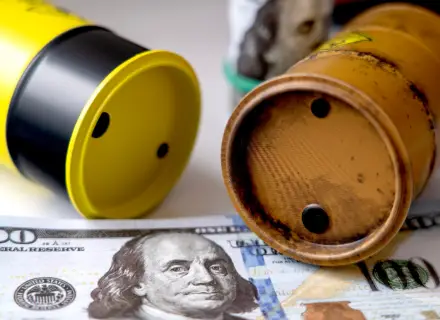

The ongoing Middle East conflict has eliminated USD 50 billion worth of crude oil, since February 28, with the analysts and Reuters calculations predicting the aftershock of the geopolitical volatility to be felt for months and even years to come. And despite announcements from Iran’s Foreign Minister Abbas Araghchi and United States President Donald Trump regarding the reopening of the Strait of Hormuz, amid the imminent “end” of the regional war, the immediate industry outlook remains unclear.
According to trade intelligence platform Kpler, since the Iran war began, more than 500 million barrels of crude and condensate have been knocked out of the global market, in what seems to be the largest energy supply disruption of modern history. Talking about the immediate impact, Iain Mowat, principal analyst at Wood Mackenzie, told Reuters that the lost fuel may end up curtailing the aviation industry’s energy demand for 10 weeks.
In the Middle East, countries lost about eight million barrels per day of crude production in March, nearly equivalent to the combined production of Exxon Mobil and Chevron, two of the biggest oil companies in the world. As per Kpler, jet fuel exports from Saudi Arabia, Qatar, the United Arab Emirates (UAE), Kuwait, Bahrain and Oman fell from about 19.6 million barrels in February, to just 4.1 million barrels for March and April so far combined.
“With crude prices averaging around USD 100 a barrel since the conflict began, those missing volumes represent roughly USD 50 billion in lost revenues,” said Johannes Rauball, a senior crude analyst at Kpler.
The ratio equates to a 1% cut in Germany’s annual GDP, or roughly the entire GDP of smaller European countries such as Latvia or Estonia.
Kpler even stated that the resumption of energy trade through the Strait of Hormuz would mean little for the global economy, as recovery of output and flows will remain slow. While global onshore crude inventories have fallen by about 45 million barrels so far in April, production outages, since late March, have reached roughly 12 million bpd.
“Heavier crude fields in Kuwait and Iraq could take four to five months to return to normal operating levels, extending stock draws through the summer. Damage to refining capacity and Qatar’s Ras Laffan LNG complex means full restoration of regional energy infrastructure could take years,” Rauball concluded.