
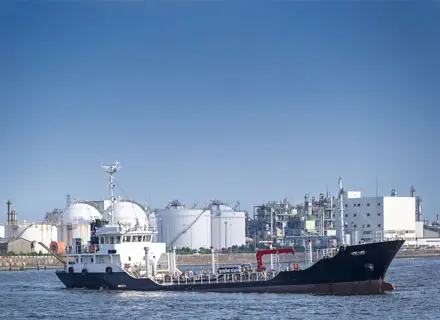

The ongoing Iran war and the maritime disruptions at the Strait of Hormuz have taken a toll on Japan’s crude oil imports, with the ratio falling nearly 66% in April from a year earlier, informed the Far East Asian country’s Ministry of Economy, Trade and Industry (METI).
The world’s fifth-largest oil importer, which imports roughly USD 70 billion to USD 90 billion worth of crude oil annually, sourcing over 90% of its supplies from the Middle East, got just 850,000 barrels per day (4.07 million kilolitres) of crude in April, METI data showed, against the established capacity of over 2.3 million barrels per day.
While imports from the Middle East fell 68%, shipments from Japan’s two largest suppliers – Saudi Arabia and the United Arab Emirates – dropped 60% or more, as the Hormuz stalemate has disrupted the supplies of roughly a fifth of the world’s oil and LNG that happen through the strategically crucial transit route. Despite several crude oil tankers leaving the Gulf region in May, energy flows via the key waterway have remained far lower than pre-war levels.
These have resulted in refiners in Japan and Asia deepening production run cuts since April due to the oil supply shortage.
Japan’s domestic oil product sales, in April, fell 11.3% from a year earlier to 2.04 million bpd, the METI data showed. Gasoline sales too went downhill, dropping 2.6% to 693,875 bpd. Kerosene sales were down 13.3% to 120,524 bpd. Sales of petrochemical feedstock naphtha reduced 35.6% to 406,231 bpd. Crude oil imports from the United States, however, rose by 38.8%.
Apart from the fall in the oil supply, a weak yen has also resulted in the import price hitting a record high. As per the METI estimates, the customs-cleared import price for crude oil stood at JPY101,389 (USD 637.8) per kilolitre in April, the highest since comparable records began in 1979. The previous record was JPY99,600 in July 2022, following Russia’s invasion of Ukraine.
“In dollar terms, the customs-cleared import price was USD 101.2 per barrel, the 57th highest on record,” the data said further.
Japan’s crude import price, also known as the Japan Crude Cocktail (JCC), is based on customs-cleared CIF (cost, insurance and freight) prices and is sensitive to global crude price movements, with a lag of about one month due to shipping times.
Higher JCC prices often raise the crude oil (along with LNG) import cost, which in turn makes thermal power generation an expensive affair, leading directly to soaring electricity bills.