
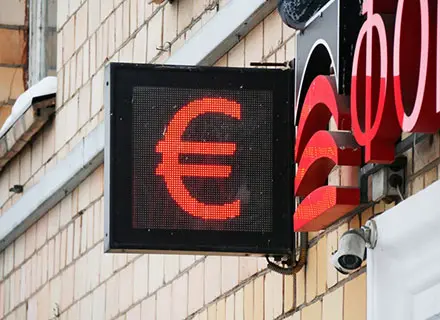

With the approval of the EU (European Union) Parliament, the European Central Bank (ECB) has cleared another key hurdle for the launch of a digital euro, an electronic means of payments aimed at making the eurozone less reliant on American credit cards, as diplomatic and trade relations remain lukewarm on both sides of the Atlantic.
“We welcome that the European Parliament’s ECON Committee has agreed on its position on the single currency package, which will safeguard euro cash as legal tender while also shaping the digital euro,” the ECB said in a statement.
The digital euro, as an electronic wallet guaranteed by the central bank but marketed by banks or fintech companies, will allow eurozone residents to make payments online and in person. While the project has been ongoing for the last six years, it only got the push in 2025 as Republican Donald Trump entered the White House for his second stint as the United States president.
His tariff-heavy trade policies, which hit the allies and adversaries alike, raised fear in the European political circle about Uncle Sam potentially weaponising its dominance over payment networks like Visa and Mastercard.
And the fear is not unfounded, given the fact that as per the European Central Bank (ECB) data, Visa and Mastercard account for 61% of card payments in the euro area and almost all cross-border card transactions.
The approval of draft rules by the European Parliament’s Economic and Monetary Affairs Committee officially ended the three years of stalemate between the ECB and banks, which have been concerned about deposit outflows and lost revenues and sought to limit the digital euro’s scope.
“The introduction of the digital euro would… reduce overreliance on non-European providers by becoming a pan-European means of payment and would bring the single currency into the digital era by giving Union citizens the freedom to opt to pay with central bank money in their daily transactions,” the draft regulation says.
However, there is still a bit of opposition against the digital euro, as Siegbert Frank Droese of the far-right “Europe of Sovereign Nations,” a political group in the European Parliament, said his group had voted against the proposal, raising the likelihood that a further vote would be needed at the Parliament’s plenary.
Notwithstanding this, lawmakers are now in a position to start negotiating with the European Council of EU governments and the European Commission from July onwards, aiming for final approval for the digital euro’s rollout by the 2026 end.
The ECB, which plans to run a 12-month pilot of the digital euro starting in the second half of 2027, before a full launch in 2029, said it looked forward to Parliament adopting its final position.
Among other nations, China has been piloting a digital yuan at scale, while countries like India and Brazil have conducted trials of their respective CBDCs (Central Bank Digital Currencies). The United Kingdom, on the other hand, has focused on research amid concerns over privacy, financial stability, and banking-sector impact. Trump, on the other hand, through an executive order, has forbidden the Federal Reserve from issuing a digital currency.
The Republican, instead of a CBDC, has backed the development of stablecoins, privately issued crypto assets designed to maintain a stable value.
Since the vast majority of global stablecoins are denominated in US dollars, the cryptocurrency’s backers argue that the technology could reinforce the dollar’s international role and expand its use in cross-border payments.
Coming back to the digital euro, based on an ECB recommendation, lawmakers have proposed in the draft regulation that the European Commission should be the final deciding authority in terms of determining how many digital euros every user could own. The ceiling, in consultation with the central bank, can be reviewed at least every two years.
“Businesses would not be allowed to hold digital euros for longer than 24 hours. The digital euro would not earn any interest or cost anything to its users,” the proposal stated further.
“The proposal reflects political compromises. It keeps commercial banks at the center of distribution, with only a limited role for public channels and other providers, and does not go as far as presenting the digital euro as a true alternative to bank deposits,” Laura Casonato, head of policy at Positive Money Europe, an advocacy group for monetary reform, told Reuters.
“Such concessions were likely crucial to win over critics such as Fernando Navarrete Rojas, the parliament’s negotiator on this file, who only recently dropped his opposition to making the digital euro available online,” she stated further.
As per the latest ECB simulations, depositors could withdraw up to 699 billion euros (USD 795.88 billion) from eurozone banks if a limit on digital euro holdings was set at 3,000 euros each.
“This is equal to 8.2% of all retail sight deposits, although the impact would be greater for small-market lenders and retail banks,” the ECB noted.
As per the draft proposals, the ECB would provide the underlying infrastructure, while commercial banks and payment service providers would offer digital euro services to customers.
“Financial institutions are expected to be compensated for their participation in the scheme, while merchants will pay fees that are expected to be lower than those associated with current card transactions,” the proposals stated further.
However, the compensation’s structuring is expected to be one of the bones of contention ahead of negotiations between the EU and its member states.