

The biggest talking point of Europe’s aviation sector has been the European Union’s “ReFuelEU Aviation” initiative, which aims to gradually increase the share of SAF (sustainable aviation fuel) blended into the conventional aviation fuel supplied at the continent’s airports. Industry stakeholders are opposing the proposal, with trade group Airlines for Europe (A4E) citing concerns like SAF’s high costs and scarce supply.
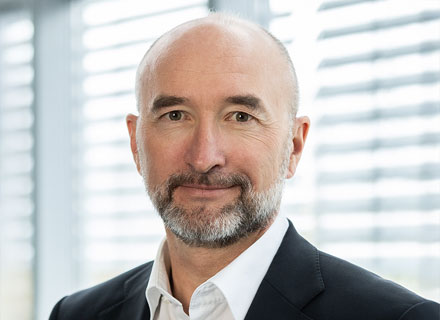
International Finance asked Thomas Engelmann, Head of Energy Transition at KGAL Investment Management GmbH & Co., regarding what should be the ideal implementation roadmap for “ReFuelEU Aviation.” Engelmann-led KGAL invests in energy transition-related projects and companies working in the domain. Thomas also acts as Managing Director for PtX Development Fund, the Power-to-X GmbH.
Previously, he was Global Head of Transaction and Investment Management, Infrastructure Equity, at Allianz Global Investors GmbH. Between 2008 and 2013, he worked for KGAL as Senior Director in the Renewable Energies and Infrastructure department, helping to build up the Renewable Energies portfolio. Engelmann gained his in-depth industry experience through various global senior management positions at Siemens AG and Siemens Financial Services (SFS).
He has held leadership positions in corporate M&A, as commercial director of industrial power plants, and as senior investment director, which show his significant know-how in technology-driven sustainable impact investments. He holds a Master’s in Business Administration and was a member of the Siemens Technical Graduate Programme. He is also a qualified Chartered Financial Analyst (CFA) and a Chartered Alternative Investment Analyst (CAIA).
Synthetic sustainable aviation fuel is in the spotlight as European airlines prepare to challenge the EU’s 6% usage mandate by 2030. What is your view on this?
Understandably, airlines are concerned about costs and competitiveness. But the direction of travel is clear: decarbonising aviation requires scaling sustainable fuels, and some of the cost will ultimately be reflected in ticket prices.
Against geopolitical uncertainty and accelerating climate impacts, the EU’s 2030 targets are a key part of improving both climate performance and energy resilience. ReFuelEU provides a predictable timeline — what matters now is execution across the value chain.
European carriers may face penalties by the end of 2026 for missing emission targets. With the sector already under strain from the Middle East crisis, will this EU rule add further pressure?
ReFuelEU places the formal compliance obligation primarily on fuel suppliers: if blending requirements are not met, penalties apply at that level. Airlines buy the blended fuel, so the impact is mainly through fuel prices.
The practical way to reduce pressure is to lock in supply early. Long-term offtake agreements between fuel suppliers and SAF/e-SAF producers help bring projects to financial close, scale production, and avoid penalties and volatility.
In December 2025, IATA projected just 2.4 million metric tonnes of SAF availability in 2026, about 0.8% of total aviation fuel demand. Is the 2030 target realistic given this slow growth?
For conventional, biogenic SAF, the ramp-up is feasible because the pathways are proven and projects are already delivering volumes, especially from waste-based feedstocks.
The tougher part is e-SAF (synthetic fuels). Those projects are capital-intensive and typically need long-term purchase commitments to secure financing. If the industry converts the mandate into bankable offtake contracts now, the 2030 target is achievable. If not, supply will remain constrained.
The EU began phasing out free carbon permits for airlines in 2025. Will this make the transition to SAF significantly more expensive for carriers?
Phasing out free allowances will make carbon costs more visible, and part of that will be reflected in fares. That said, the transition to lower-carbon fuels cannot be postponed if aviation wants to deliver real CO2 reductions this decade.
As a rough order of magnitude, meeting the 2030 blending targets could add around €20 to a typical return ticket, with variation by route and fare type. For very low fares, the percentage impact can look larger — but delaying action risks higher costs and a more abrupt adjustment later.
Aviation also has an important advantage: meaningful emission reductions are possible through fuel switching without waiting for a full fleet renewal. Other industries must invest in parallel into the production progress (e.g. green steel production facilities).
SAF is central to aviation’s 2050 decarbonisation goals, yet production remains limited. What key factors are holding back supply?
The bottleneck is not the mandate — it’s the speed at which long-term offtake agreements are signed. Those contracts are what unlock financing and investment in new production capacity, especially for e-SAF.
Biogenic SAF can scale where sustainable waste feedstocks are available at a competitive cost. e-SAF needs new, capital-intensive plants and typically requires 10-year purchase commitments to reach financial close.
In short: stable policy plus bankable contracts equal new supply. Without contracts, projects slip, and volumes for 2030 remain out of reach. The prices per tonne can only go down, if scale effects are kicking in.
IATA has criticised the EU’s SAF mandate as costly and constrained by limited regional availability. Should the EU reconsider its 2030 target?
In my view, the EU should keep the 2030 target stable. Changing the rules now would undermine confidence and slow investment just as the market is starting to scale.
Today’s aircraft can already use blended fuels. SAF is one of the fastest routes to near-term CO2 reductions in aviation. Europe also has strong strategic reasons to build domestic e-SAF capacity and reduce dependency.
The priority is execution: convert mandated demand into long-term purchase commitments, bring projects to financial close, and build supply.
A 2025 Boston Consulting Group report found that airlines are allocating only 1% to 3% of their budgets to SAF. How much more investment is needed to scale up effectively?
Most of the investment need is upstream — in new SAF and especially e-SAF production capacity — rather than on airline balance sheets. Airlines will mainly feel the effect through fuel prices and supply contracts.
To give an illustration, meeting the 2030 e-SAF ramp-up in Europe likely requires multi-billion-euro annual fuel purchase commitments and double-digit billions in capital investment for new plants. The exact numbers depend on technology, electricity prices, and project location.
What turns those figures from “aspirations” into steel in the ground is straightforward: long-term, bankable offtake agreements.
What about claims by airlines that fuel producers are inflating SAF prices while failing to scale supply?
In the short term, prices are being shaped by tight supply, regulatory uncertainty, and high financing costs for new projects. The real question is whether higher prices are accompanied by measurable progress in contracted volumes and delivered supply.
To reduce both costs and volatility, the market needs transparency and long-term contracts that enable producers to invest. Clear certification and reporting also help ensure that SAF premiums are linked to verified blending and emissions reductions.
Willie Walsh, the Director-General of the IATA, has argued that transporting SAF to Europe could increase its overall carbon footprint. Do you agree with this concern?
Transport emissions matter and should be reflected transparently in lifecycle accounting. But that does not automatically argue against imports — it argues for smart supply chains and robust sustainability criteria.
At the same time, Europe should scale domestic SAF and e-SAF capacity wherever feasible. Otherwise, it risks trading one dependency for another. One- third of SAF and e-SAF production in Europe should be feasible.
To meet the 2030 target, should stakeholders, including the EU, IATA, and airlines, collaborate on a revised and unified roadmap?
Stakeholders should align on implementation—but within a stable policy framework. Reopening the mandate would create uncertainty and likely slow investment in a market that still needs scale.
The most useful “roadmap” is practical: long-term contracting, clear certification and reporting, infrastructure readiness, and mechanisms that accelerate bankable e-SAF projects. If we want supply to grow, we need to turn targets into purchase commitments that projects can finance against.
Done well, this is not only a climate policy — it is also an industrial and energy resilience opportunity for Europe.