
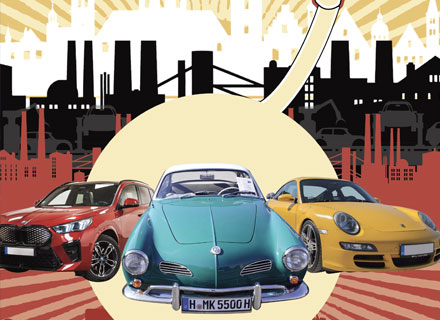

The April 2026 report from the London-based marketing consultant Brand Finance found four of the top five most valuable automobile brands are from Germany.
However, all that glitters is not gold. Apply the proverb to the real-world scenario and you will find it sitting perfectly with Germany’s crown jewel. Beneath so-called top rankings, lies weak consumer demand, slowing electric vehicle (EV) sales, intense competition from Chinese manufacturers, rising production costs, geopolitical uncertainty, and the expensive transition toward electrification, that are squeezing profits across the industry.
One after another, companies are announcing restructuring plans, only to meet opposition and scrutiny from labour unions. The current industrial downturn do not appear to be a cyclical one.
The issue reflects a painful structural transformation, that is forcing German automakers to rethink their business models, putting millions of jobs at risk.
An ongoing bloodbath
Let’s start with Volkswagen. The company’s operating profit fell 9.5% in the April-to-June period to 3.5 billion euro (USD 3.98 billion). With revenues of 82.4 billion euro, the group was somehow able to keep its operating margin within the 4.0% to 5.5% target range for the full year, at 4.2% in the second quarter.
The group no longer expects revenue growth, and instead the automaker is bracing up for profit decline of up to 3% in 2026.
CEO Oliver Blume has been uncompromising on the need of the automaker becoming competitive against Chinese rivals, both at home and abroad, by large-scale cost-cutting.
Blume believes Volkswagen is facing more than 150 Chinese competitors right now, with some of them even challenging the German giant successfully in its home turf.
Blume’s restructuring plans have met with resistance from the powerful labour unions. They believe that, more than job cuts, progress on technology and product development will help the company stage a comeback.
Mercedes-Benz, another German major, has seen its core car business suffering an 8% fall in the second quarter. In China, the sales drop was a whopping 30% compared to the same period in 2025.
The automaker posted a higher Q2 profit, as the figure rose 22% to 1.5 billion euro (USD 1.7 billion), thanks to its financial services and vans.
As per CEO Ola Kaellenius, Mercedes’ German factories are in need of an intense push for leaner production (read potential job losses). The automaker is already diversifying its operations to open up new profit streams.
It is boosting its production presence in cheaper Eastern European countries, such as Hungary and Poland. In Argentina, during May this year, the company inaugurated a USD 110 million industrial truck plant, with the goal of producing up to 10,000 units per year.
No one is spared
BMW too will cut several thousand jobs in Germany by 2027-end in response to a squeeze in profits and weak demand.
The automaker’s Q2 deliveries shrunk by 4.9% and following the loss-making patterns of its domestic peers, BMW saw heavy sales drop in China. A 30.2% downfall in the world’s largest auto market couldn’t be offset by the combined 19.5% growth seen in the American and European markets.
The automaker will now trim its product portfolio, reviewing model variants in certain markets as electric vehicle adoption diverges between countries such as China, where EVs dominate, and the US, where combustion-engine vehicles remain popular.
It has also signed a long-term deal with Qualcomm to acquire chips for its future digital cockpit and advanced driver-assistance systems, that will come as built-in features for its next-generation vehicles.
The company has concluded a USD 1.7 billion investment in its production plants in South Carolina, gearing up for the launch of EV production in the United States.
Luxury carmaker Porsche will cut around one in five jobs by 2035, with 9,000 positions to be axed in total (from the total workforce of 42,600), toeing the restructuring line of parent Volkswagen and its brands.
Michael Leiters, who became the CEO earlier 2026, has been tasked with overhauling the business, with sales in Porsche’s once highly lucrative China market collapsing and its EV strategy stalling.
Porsche has given its workers the guarantee of keeping sites open for another five years, until the end of 2035, as well as 2.1 billion euro (USD 2.39 billion) in investments in its main factory in Stuttgart-Zuffenhausen and its R&D centre in Weissach.
Things spill at supply chain front too
The automotive sector is the backbone of the German economy, with an estimated three million people directly and indirectly employed by household names, including Volkswagen, Mercedes and BMW.
According to a June 2026 report published by the Boston Consulting, “For decades, Europe’s car industry had underpinned the continent’s most powerful manufacturing networks with deep supplier systems, highly skilled labour, and scale-driven efficiency but that stability had been turned upside down.”
The study found that Europe’s production capacity now exceeded demand by ‘more than five million vehicles a year’, or the equivalent of ‘35 production sites’ across the continent.
Both Europe and China have one common enemy: overcapacity. However, China has found a solution, by exporting and selling cheap EVs on a global scale, including in Europe, while the continent’s automakers have failed to generate enough demand in their backyard, resulting in poor financials.
In Germany’s case, the mess has spilled over to the supplier level too.
Bosch, a global engineering and technology giant, that operates across mobility (auto parts and software) and industrial technology (factory automation), received a massive jolt in June as Volkswagen walked away from a 1.5-billion euro (USD 1.7 billion) investment in its automated driving partnership with the supply chain giant, citing a sweeping cost-cutting drive.
Since then, things have not gone smoothly for the supply chain giant. It has decided to cut roughly 13,000 to 22,000 jobs through 2030, due to a 2.5-billion euro cost gap, weak market demand, and intense price competition from Chinese EV and tech manufacturers.
The rubber and plastics division of Continental recently reached an agreement with German labour representatives on a cost-saving programme involving around 1,600 job cuts. Following the agreement, Continental will launch a voluntary programme offering eligible employees at the ContiTech business the option to leave under agreed conditions.
German machine and car parts maker Schaeffler has cut its medium-term sales target, citing weaker market expectations, particularly for passenger cars and light commercial vehicles. The company now expects 2028 sales between 24 billion euro and 26 billion euro (USD 27.6 billion and USD 29.9 billion), respectively, down from an earlier range of 27 billion euro to 29 billion euro.
For Schaeffler, to make matters worse, major American customers have withdrawn component orders, something that the CEO Klaus Rosenfeld said was not included in the venture’s 2025 planning assumptions.
While Schaeffler, despite cutting its sales outlook, confirmed its 2028 group targets for an adjusted operating profit margin of 6% to 8%, and adjusted free cash flow of 400-600 million euro, it has decided to move ahead with its partial retirement programme in Germany to lower costs at its domestic sites.
The measure, expected to be taken up by around 1,300 workers, had been agreed with employee representatives, and would result in a one-off charge of about 51 million euro (USD 59 million) in 2026, with savings expected from 2027.
A financial analysis by Strategy&, PwC’s German consulting arm, found average interest expenses at Germany’s leading auto suppliers rising for a fourth consecutive year in 2025 to 102% of operating earnings, far exceeding levels in the rest of Europe and China.
Apart from severe debt loads, the study also discovered another pressing financial problem for these companies: lower average equity ratios than their competitors, leaving them more exposed to financial stress.
Suppliers themselves are under pressure to compete, with Strategy& terming the cost gap between German and Chinese suppliers as a ‘widened one’ between 2019 and 2025.
“While German suppliers’ overhead costs worsened during that period, Chinese competitors became more efficient, reducing both overhead and manufacturing costs as a share of revenue,” the analysis noted.
China looms large
Europe’s auto market, especially the EV segment, saw sales growth in June 2026, offsetting a sharp decline in petrol and diesel sales, according to data from the European Automobile Manufacturers’ Association (ACEA).
While total car registrations rose 13.1% to 1,407,332 vehicles, battery-electric, plug-in hybrid and hybrid car registrations climbed 51%, 22.7% and 17.1%, respectively, together accounting for almost 70% of all new vehicles.
The uptick helped Chinese brands expand their footprint further across the European Union, Britain and the European Free Trade Association.
BYD, Chery and Leapmotor sold almost three and six times more than what they did in 2025. SAIC and Geely witnessed their sales rising more than 50% and 11%, respectively.
Registrations at Renault, Stellantis and Volkswagen rose between 3.6% and 7.3%, which are nowhere close to their Chinese rivals.
The EU’s tariffs on Chinese BEVs, which can add up to 45.3% in costs , have done little to blunt the cost advantage. BYD’s Dolphin Surf Boost is priced in Europe from 26,990 euro (USD 30,800), still 3% cheaper than the comparable Renault 5 E-Tech.
Closely following the European market trends, the automaker is increasingly leaning on plug-in hybrids (PHEVs), which escape the additional tariff altogether. The strategy change resulted in the automaker’s May sales growing by 140%.
Germany, in the beginning of the year, introduced a new incentive, worth up to 6,000 euro for BEVs and PHEVs, while Sweden and Italy have expanded their own policy support. The consumer response got reflected in the continent’s Q1 2026 sales numbers. Total electrified vehicle market share sat at 67.5%, with China emerging as the winner.
Given the intense pace of the global protectionism, local production is emerging as the new reality, and the Chinese are again aware of that. Leapmotor is set to assemble SUVs at a Stellantis plant in Spain. Chery recently opened a European headquarters in Barcelona.
Chinese players are consolidating their grip
Beijing hosted the world’s largest auto show this year too, amid the growing shadow of the global energy crisis in the backdrop of the Iran war and the Hormuz disruption. The 2026 edition featured 1,451 vehicles, including 181 world premieres and 71 concept cars, across a record-breaking 380,000 square metres of exhibition space.
Instead of competing with the Western carmakers on the internal combustion engine front, China decided to take the game to the next level: electric. In May 2014, the then Communist Party Chairman Xi Jinping (and now the President) outlined the goal during a visit to SAIC Motor. What followed was a series of priority state fundings and an international talent recruitment program.
During the Covid years, as international executives stayed away from China, the domestic industry made remarkable advances, both on the vehicle and the supply chain fronts. It resulted in CATL and BYD now dominating global battery supply chains, apart from leading in innovation and disruption fronts, with low-cost sodium batteries all set to come to market in 2026.
China excels in making small, affordable EVs, without compromising on the feature front. It has beaten its global peers on the innovation front. Every 18–24 months, a new vehicle emerges, against the global average of five–seven years. While Tesla developed a 48V architecture for its Cybertruck (up from 12V), Chery is believed to have put the vehicle’s Chinese counterpart under mass production.
Bugatti, which had held the all-time speed record for six years, with its W16 hitting 489 kilometres per hour, got beaten by BYD’s Yangwang U9 Xtreme, that did 496 kilometres per hour with four electric motors and a 1,200V lithium iron phosphate battery pack. The Xtreme was reportedly built in just 18 months.
BYD, ranked as China’s second-largest battery manufacturer, recently broke new ground by developing a car battery with what it calls ‘Megawatt charging technology’. In just five minutes of charging, this battery can travel up to 250 miles.
Chinese EV brands are now branching out into batteries, semiconductors, and other products related to their industry, to expedite their own vehicle manufacturing. Their global peers, including the Germans, are dependent on external partners. Vertically-integrated supply chains, or the lack of it, have become the make-or-break factors here.
China vs Germany: A statistical comparison
The harsher side of China’s rise as a global EV powerhouse has been its domestic front. As per Carscoops, apart from BYD, Xiaomi, and Leapmotor, no more than four additional companies are expected to break even by 2030.
The challenging earnings environment has pushed automakers to expand more aggressively into overseas markets. Data from the China Passenger Car Association showed that sales of BEVs and PHEVs, in the world’s largest car market, totalled 1.04 million units in June, down 7% from the same month in 2025.
Sales for the first half of 2026 fell 13% year-on-year to 4.73 million vehicles. The reason? A dampened consumer demand due to economic uncertainty, expectations of further price declines, and the gradual withdrawal of government support.
Beijing has revised its subsidy programme, phasing out tax incentives for EV manufacturers, a process that will be completed in January 2027.
Analysts estimate the vehicle export tally to be around 10 million by the end of 2026, a 41% increase from 2025.
The removal of tax rebates has hit German ventures too. The sales share held by Volkswagen, Audi, BMW, Mercedes-Benz, and Porsche went down to just 1.6%. That is the lowest on record, with only 19,200 new EVs from these brands registered between January and March, a 55% drop year-over-year.
Volkswagen’s EV sales alone fell by more than 72%, while BMW dropped nearly 65%, and that of Mercedes-Benz slipped by around 14%.
However, it would be unfair to blame the lack of tax rebates alone.
Let’s take BMW as an example. The company is betting on its ‘Neue Klasse’ electric cars to revive its fortunes in China after two years of declining sales. But shareholders and analysts see the five-year development process as a slow one, against the break-neck R&D speed of its Chinese rivals.
Supporters of German cars may say their favourite brands excel on quality. So does China. Nio reportedly drove its flagship ET9 sedan over speed bumps with a tower of champagne glasses balanced on the bonnet, without spilling a drop, to showcase the vehicle’s advanced suspension system.
While Chinese premium brands are openly targeting customers of BMW, Audi, Porsche and Mercedes, only about 5% of BMW’s sales in the world’s largest automobile market have remained fully electric, according to Global Mobility data.
In a market where EVs account for 46% of vehicle sales, the stat is more than disappointing. And that has resulted in BMW’s China sales going down in both 2024 and 2025. Sales at Mercedes and Volkswagen’s Audi brand have also been down, dropping 28% and 19%, respectively, in the H1 2026.
According to Shanghai consultancy LandRoads, BMW’s average transaction price in China in 2025 was 341,000 yuan ($50,200), below local brands such as Nio, Aito and Denza. Among German premium brands, only Audi was priced lower, at 287,000 yuan.
Predicting the situation ahead
German brands are now tightening ties with Chinese automakers in an effort to steady the numbers. Audi launched its China-only AUDI brand with SAIC in 2025, and is currently preparing a third all-electric model. Volkswagen has teamed up with Xpeng and recently unveiled the ID. Aura T6 and ID. Unyx 09 at the Beijing Auto Show. Developing these cars locally has cut costs by at least 40%, a figure that explains much of the strategy.
Mercedes will sell its all-electric GLC EQ and the new electric C-Class in China, while partnering with a local company to produce models exclusively for the country. Similarly, BMW has gone it alone with the new iX3 and i3, both of which will be sold in China in long-wheelbase form.
Volkswagen, apart from its aggressive cost-cutting, now sees a revised product offering as a solution, including a new pick-up truck, an avenue for expansion in the United States. Pick-up trucks and large SUVs are in strong demand in the world’s largest economy. As per reports, while the automaker doesn’t offer pick-up truck in its line-up, it plans to bring one into the US market before the end of the decade.
While the American market remains attractive for sellers of combustion engine trucks and SUVs, Volkswagen will face stiff competition from Ford, Ram-maker Stellantis and General Motors.
As of now, it looks like collaboration with Chinese players and expansion elsewhere in the world have emerged as preferred survival options for German automakers.