

Something unusual is happening to one of the Middle East’s biggest mobile operators. Piece by piece, Qatar’s Ooredoo is taking itself apart. Not in crisis, not under pressure from creditors, but deliberately, with the enthusiasm of a company that has discovered its parts are worth more than the whole.
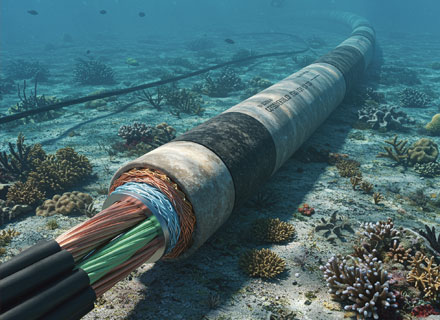
The data centres now sit inside a company called Syntys. The mobile masts in Qatar have moved into a new firm named Al Abraj. The undersea cables and international fibre routes are being bundled into Ooredoo Fibre Networks.
And a long-gestating venture with Kuwait’s Zain and the Dubai-based TASC Towers would pool roughly 30,000 telecommunication tower assets across Qatar, Kuwait, Algeria, Tunisia, Iraq and Jordan into a jointly owned independent tower company.
Each move follows the same logic. Investors will pay handsomely for a business that owns physical kit and collects steady rent for decades, the way they pay for a motorway or a power station. They will pay far less for a firm that simply sells phone contracts.
Ooredoo’s half-year results read less like a telecom earnings statement and more like a progress report on a demolition schedule.
A solid half, and a strategy laid bare
The numbers themselves were respectable. Revenue grew 4.6% year-on-year to QAR 12.5 billion as demand for connectivity and data services held up across its markets, EBITDA rose 7.4% to QAR 5.5 billion, and free cash flow climbed 7.7% to QAR 3.9 billion.
The group’s customer base reached 147.5 million, including Indosat Ooredoo Hutchison. Net profit attributable to shareholders slipped 5.1% to QAR 1.8 billion because of a one-off legal provision in Algeria.
Group chief executive Aziz Aluthman Fakhroo called the first half ‘another period of solid execution for Ooredoo’ on the earnings call, pointing to higher revenue, EBITDA and normalised profit across the footprint.
Aziz added, “International connectivity and subsea infrastructure are already among the most strategic digital assets in the world, and demand is accelerating with AI, cloud, and hyperscale growth… We have set a clear ambition to grow our international infrastructure and subsea cable business from 3% to 12% of Group revenues over time.”
But the more revealing material came later. A key milestone was the launch of Al Abraj, a standalone company established to independently manage Ooredoo’s passive tower infrastructure in Qatar following regulatory approval, part of a portfolio optimisation strategy aimed at improving capital efficiency.
The group also expanded its digital infrastructure arm through Syntys, which acquired Q Data QFZ LLC in Qatar, adding 12.5MW of hyperscale data centre capacity. Management told analysts that the first close of the Al Abraj tower transaction should be completed by the next investor call, with the equalisation payment formula agreed with Zain Group unchanged.
In other words, the strategy is on schedule. The question is what the strategy leaves behind.
The pieces on the table
Start with the masts. Al Abraj launched in June as a standalone company that will independently operate and manage Ooredoo Qatar’s passive tower infrastructure, after approvals from the Communications Regulatory Authority, marking the first operational carve-out under Ooredoo’s TowerCo initiative. Khalid Barzak, a 16-year telecom veteran, was appointed General Director.
Qatar is only the opening act. The bigger prize is the joint venture with Zain and TASC, a USD 2.2 billion independent tower company estimated to turn over USD 500 million a year and generate EBITDA after leases of more than USD 200 million once fully operational, with Ooredoo and Zain each controlling 49.3%.
When the deal was signed, the three chief executives issued a joint statement describing it as ‘placing the MENA region on the world telecom tower map’.
Then the data centres. Syntys, established in 2025 as a spin-off from Ooredoo, operates facilities in Qatar, Kuwait, Tunisia, Oman and Iraq. It has been growing at pace. The Q Data acquisition took its operational IT capacity in Qatar to 26MW and total installed capacity to 30MW, on the way to a long-term goal of 120MW by 2030. Management now believes it can get there early.
With 17.9MW of capacity either under construction or fully contracted, the group expects to reach the 120MW target about two years ahead of schedule, by 2028, if current demand holds.
The customer mix tells its own story. In the first quarter of 2026, Syntys recorded QAR 51 million in revenue and QAR 22 million in EBITDA, with hyperscalers accounting for 76% of revenue in Qatar, backed by a $1 billion investment programme.
Iron Mountain, the global data centre and information management group, acquired a minority equity stake in Syntys, an early sign that outside infrastructure capital wants in.
Finally the cables. In February, Ooredoo announced the formation of Ooredoo Fibre Networks, a unit led by Khalid Hassan Al-Hamadi, with the carve-out expected to complete by 2027.
Aziz said the company wants to grow its international infrastructure and subsea cable business from 3% to 12% of group revenues over time. The anchor asset is the FIG subsea cable system, under development with Alcatel Submarine Networks and spanning approximately 1,900 kilometres, alongside further submarine and terrestrial investments designed to create a new regional connectivity corridor between Europe and Asia.
Why the sum of the parts beats the whole
The financial logic is brutally simple, and analysts have been happy to spell it out. Elie Abouatme, EMEA head of telecom, media and entertainment at ServiceNow, told AGBI that integrated telecom operators typically trade at around four to six times earnings, while infrastructure platforms can command ten to fifteen times, because cable providers offer predictable, long-term, utility-like cash flows attractive to infrastructure investors. As he put it, “Historically, this model unlocks significant shareholder value.”
The same maths applies to towers and data centres. A mast does not care whose antenna hangs on it. A data hall does not care whose servers hum inside. Once separated from the parent, these assets can sign long contracts with multiple tenants, borrow cheaply against those contracts, and be valued like real estate rather than like a consumer business fighting price wars over prepaid SIM cards.
Telecoms analyst Vakai Muntambirwa (BMI / Fitch) said, “By separating their division, Ooredoo gives OFN the operational independence and strategic focus to become a dedicated infrastructure provider with a clearer focus to expand routes, add capacity, and maximise utilisation of subsea cable and fibre infrastructure.”
The AI boom sharpens all of this. Training and running large models demand exactly what Ooredoo is unbundling. Compute needs data centres. Data centres need connectivity. Connectivity needs cables and towers. Aziz made the connection explicit when OFN launched, describing international connectivity and subsea infrastructure as ‘among the most strategic digital assets in the world’, and noting that demand is accelerating with AI, cloud and hyperscale growth.
Nor is Ooredoo alone. Other Middle Eastern telcos have established regional tower operators in the hunt for efficiency and asset monetisation, from Saudi Arabia’s TAWAL to Oman Tower Company, and the wholesale connectivity market is bracing for the newcomer.
Brendan Swan, senior analyst at GlobalData, predicted, “The emergence of Ooredoo Fiber Networks will likely cause some disruption in the market, with incumbents looking to protect their turf and maintain their status in the region.”
In a LinkedIn post marking the Al Abraj launch, Aziz wrote that the carve-out was a milestone in the company’s plan to ‘evolve from a traditional telecom operator into a leading digital infrastructure provider’, and told followers that Qatar was only the first market under the multi-market TowerCo initiative. Watch this space, he added.
So, what is left of the phone company?
Here is the uncomfortable part of the story. Strip out the towers, the data centres and the cables, and what remains of Ooredoo is a retail brand, a spectrum licence, a billing system and a customer base of prepaid and postpaid subscribers in fiercely competitive markets.
The half-year results already show the texture of that business. Growth came from Algeria and Tunisia on the back of data demand, while core Gulf markets faced device-related revenue pressures, and Iraq wrestled with government salary payment disruptions.
And yes, the operator will pay rent on what it built. That is the entire design. The Zain venture will operate as an independent standalone entity providing passive infrastructure as a service throughout the region, which means Ooredoo becomes a tenant on masts it erected over decades. The sale-and-leaseback template is well established.
Zain Iraq previously agreed a 15-year deal to sell and lease back its portfolio of nearly 5,000 towers to TASC for USD 180 million.
Defenders of the model argue this is not weakness but discipline. Capital tied up in steel and concrete earns a telco nothing extra. Released, it can fund fintech, 5G spectrum and dividends, while the infrastructure companies raise their own money at better multiples.
Sceptics counter that a telco without assets is a marketing operation with a network attached, permanently exposed to rent escalations negotiated by landlords it once owned, and that the premium being paid for AI infrastructure today may not survive the cycle.
Ooredoo is 68% owned by Qatari state-related entities. So. this is also sovereign strategy, an attempt to make Doha a regional connectivity powerhouse rather than a national operator. The break-up will probably create value on paper, and quickly.
Whether the phone company at the centre of it thrives as a capital-light service brand, or slowly discovers it sold the family silver to buy back cutlery, is the question the next few years of rent invoices will answer.