

The United States signed a series of deals on trade and critical minerals with four Southeast Asian partners in October, looking to address trade imbalances and diversify supply chains amid tighter export curbs on rare earths by China.
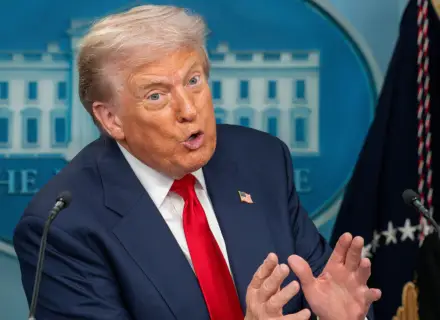
President Donald Trump, during his visit to Kuala Lumpur to attend a summit of the Association of Southeast Asian Nations (ASEAN), signed reciprocal trade deals with his Malaysian and Cambodian counterparts, apart from sealing a framework trade pact with Thailand that will see the countries work to address tariff and non-tariff barriers.
According to joint statements released by the White House, the United States will maintain a tariff rate of 19% on exports from all three countries under the deals, with the levy to be reduced to zero for some goods. Washington also announced a similar framework deal with Vietnam, which has levied a tariff rate of 20% on its exports to the United States.
The Southeast Asian nation, which recorded a trade surplus of USD 123 billion with the world’s largest economy in 2024, has pledged to vastly boost its purchases of American products to reduce the trade gap between the two countries.
Under the separate deals signed with Thailand and Malaysia, the Trump administration will seek cooperation to diversify critical minerals supply chains amid competing efforts from Beijing in the rapidly growing sector. The Xi Jinping administration is in talks with Kuala Lumpur on rare earths processing, with Malaysian sovereign wealth fund Khazanah Nasional expected to partner with a Chinese firm to build a refinery in Malaysia.
China, the world’s top miner and processor of rare earths, has imposed increasingly stringent export controls on its refining technology, sending global manufacturers scrambling to secure alternative supplies for critical minerals used widely in semiconductor chips, electric vehicles, and military equipment.
Malaysia, which has an estimated 16.1 million tonnes of rare earth deposits, has banned the export of raw rare earths to prevent the loss of resources as it looks to develop its downstream sector. However, Washington will get an exemption here, as Kuala Lumpur will now refrain from banning or imposing quotas on exports to the US of critical minerals.
While under the deals the four Southeast Asian countries pledged to remove trade barriers and provide preferential market access to various American goods, the commitments also covered areas like digital trade, services, and investments, as well as promises by the Southeast Asian countries to protect labour rights and strengthen environmental protections.
Thailand, Malaysia, and Vietnam agreed to accept vehicles built to US motor vehicle safety and emissions standards. Talking about Thailand, it would eliminate tariff barriers on approximately 99% of goods and relax foreign ownership restrictions for US investment in its telecommunications sector.
Both sides also took note of several forthcoming commercial deals between Thai and American companies, including the purchases of agricultural products such as feed corn and soybean meal worth an estimated USD 2.6 billion per year.
Thailand has also committed to purchases of 80 US-made aircraft totalling USD 18.8 billion and energy goods, including liquefied natural gas and crude oil, of around USD 5.4 billion annually.