
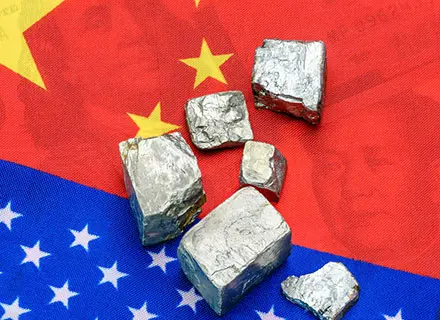

In a setback to Donald Trump’s G2 claims, an informal terminology that the Republican has been using in his second term as the United States president to signify the “Group of Two” way of conducting direct diplomatic engagements with his Chinese counterpart Xi Jinping, Beijing has tightened export controls on two leading American rare-earth companies.
China’s Ministry of Commerce added MP Materials and USA Rare Earth to its export control list, effectively prohibiting Chinese suppliers from providing them with dual-use products, including critical rare-earth materials used in magnets, defence systems, electric vehicles, and advanced technologies. Eight other US entities, including aerospace motor manufacturer Aveox, were also placed on the list.
The move comes at a time when, despite Trump going gaga over the “G2”, his administration is still intensifying efforts to rebuild a domestic rare-earth supply chain and reduce its dependence on China, which dominates the global production and processing of the strategic minerals.
In a statement, China said the measures were taken in response to what it described as the Trump administration’s “malicious practice” of imposing restrictions on Chinese companies, apart from being “necessary” to safeguard national security and fulfil international non-proliferation obligations.
The restrictions amount to a full ban on exports of dual-use items to the targeted firms, going beyond previous rules that merely required export licences. Both MP Materials and USA Rare Earth are involved in the global mine-to-magnet supply chain.
“Organisations and individuals in any country or region are prohibited from transferring or supplying dual-use items originating in China to those entities,” the Jinping government said, adding that export activities should be stopped immediately.
MP Materials, which operates the Mountain Pass mine in California, the only active rare-earth mine in the United States, and USA Rare Earth are central to Washington’s efforts to establish a mine-to-magnet supply chain and are, however, free from Chinese dependence. Both companies have received substantial backing from the US government, including Pentagon support, to expand domestic production of rare-earth magnets.
The latest action adds another obstacle to American efforts to secure supplies of heavy rare earths such as dysprosium and terbium, key ingredients in heat-resistant magnets used in automotive systems, military equipment, artificial intelligence (AI) chips, and other advanced technologies.
China already imposed strict export controls on seven rare-earth elements and related magnets in April 2025, citing their dual military and civilian applications. The restrictions disrupted production across industries ranging from automobiles and robotics to defence manufacturing.
Chinese customs data show exports of dysprosium to the United States have been halted since April 2025, while shipments of terbium have largely ceased since late 2025. Industry executives say supplies outside China remain limited and insufficient to meet expected demand from large-scale US magnet manufacturers.
The move also follows a recent update to the Pentagon’s so-called 1260H list of Chinese companies allegedly linked to the Chinese military. Newly added firms included major Chinese technology and automotive companies such as Alibaba Group, Baidu, BYD, and NIO.
Analysts said Beijing’s response was largely symbolic because many of the affected American companies have limited commercial exposure to China. However, the restrictions underscore China’s continued leverage over a sector in which it controls roughly 90% of the global light rare-earth supply and more than 98% of heavy rare-earth refining capacity, a capability that Beijing is trying to use as a geopolitical tactic to get the better of its rivals.
“Most of the companies are US defence industry players, or they have close connections with the US government… Those companies are not going to do business in China, so the impact will be quite symbolic. Beijing’s move today is a proportional response to the Department of War’s 1260H list,” said George Chen, partner for Greater China at the Asia Group, a geopolitical advisory firm, while interacting with Reuters.
The dispute is likely to remain a major source of friction as both countries seek to secure control over critical mineral supply chains that underpin future industrial and military competitiveness. In fact, escalating things further, China’s finance ministry would take measures against 46 American companies by barring domestic buyers from procuring any products manufactured by them.