
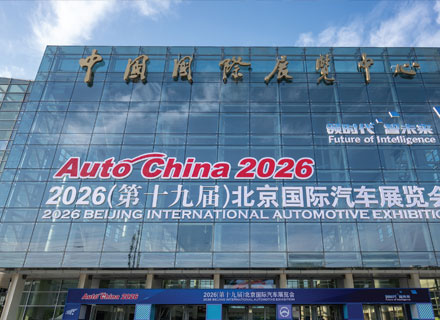

The Beijing Auto Show 2026 was a proud display of the Chinese industry’s next-generation capabilities. Huawei’s intelligent car business unveiled its new assisted driving system, which the company believes can reduce collisions by 50% compared with its predecessor.
AI took centerstage in the event, with Huawei introducing an in-car voice-activated agent dubbed Celia. CATL, on the other hand, grabbed headlines through its flying car concept, apart from displaying a lighter-weight product offering over 1000-km range, with the product reportedly possessing charging capability from 10% capacity to 98% in under seven minutes.
The Chinese electric vehicle giant BYD rewrote the innovation playbook, by making a giant freezer the main piece of attraction in its pavilion. Inside of the freezer, a car dripping with icicles showed the company’s new fast-charging system’s ability to power up a battery even in temperatures of -30° Celsius.
Western automakers up for collaboration
Despite the Chinese automobile industry being known for its brutal price wars and overcapacity, both Chinese companies and their foreign counterparts are gung ho about their prospects.
Germany’s Volkswagen, the largest overseas automaker by market share in the world’s second-largest economy, unveiled its new electric ID.UNYX 08. It has tied up with Xpeng to develop the vehicle’s electrical architecture, while Horizon Robotics took part in realising the in-car AI agent.
Huawei, in 2026 alone, will be investing 18 billion yuan ($2.6 billion) in smart driving research and development. Its software and components are currently used in some 50 models, with the company anticipating the number to double to 100 by the year-end. CATL, which increased its research budget by 19% to $3.2 billion in 2025, will be raising another $5 billion in the coming days.
Despite industry profit falling 18% in Q1 2026, along with dipping sales profit margin, revenues and outputs, the Chinese automotive sector is in no mood to back down on the R&D front, while foreign automakers are collaborating with local ecosystem players to ramp up their technology game in the biggest global car market.
Many of the vehicles, which made their debut in Beijing Auto Show, will likely end up being in European markets in the coming days.
“The stronger presence and engagement of global companies at the Beijing Auto Show highlights China’s rising importance as a centre for automotive innovation, and one of the world’s fastest-evolving car markets, especially as the industry speeds up its transition toward electric and smart mobility technologies,” Cui Dongshu, secretary-general of the China Passenger Car Association (CPCA), told the Global Times.
There was a change in tone among Western automakers during the auto show. Andreas Mindt, Volkswagen’s Head of Design, dubbed the event as ‘arguably the world’s largest’, while noting positive developments like more participants, global premieres, and new car launches, alongside rapid progress in EVs, battery technology, and self-driving systems.
“Volkswagen Group has been part of Auto China since 1990. No other international automotive player has such a great history like we have in China. China is like a fitness centre for the automotive industry. We saw it, we embraced it, and we changed ourselves,” said Oliver Blume, the German automaker’s CEO.
Volkswagen, with the goal of defending its position as China’s top-selling foreign automaker, will be launching over 20 new energy vehicle (NEV) models in the world’s largest vehicle market, a tally which will reach around 50 by 2030.
Volkswagen’s German peer, Mercedes-Benz, too is making electrification and intelligent technologies as pivots of their vehicle line-ups in China, while putting equal focus on luxury and high-end custom offerings.
As per Cui, the increasing engagement between global automakers and their Chinese counterparts only shows the evolution of the world’s largest vehicle market as a key hub for innovation, testing, and competition across new ideas, products, and business models.
“More and more domestic and overseas car brands are putting more investment into electrification, a move that clearly demonstrates there is no such thing as ‘overcapacity’ because the market demand is huge and expanding,” he noted.
US opting for tested protectionism
While the Beijing Auto Show gave a glimpse of the changing reality of the global automobile sector, with European automakers now seeing their Chinese counterparts as peers more than rivals, their American counterparts have taken a different direction.
Ford CEO Jim Farley doesn’t want Chinese companies on American shores, citing the move to be ‘devastating’ to domestic manufacturing. General Motors boss Mary Barra shares this view. In early 2026, she called the deal by Canada to allow Chinese EVs into the North American country a risk to the continent’s auto manufacturing sector, jobs and national security.
Both Farley and Barra found support within the Alliance for Automotive Innovation (AAI). AAI, that represents the US Big Three (General Motors, Ford Motor Company and Stellantis) and several other US manufacturers, has been stating that China poses a real threat to the American automotive sector.
In December 2025, AAI had urged Congress to maintain the Joe Bidenera ban on import of certain Chinese technologies and software, including vehicles produced in the world’s second-largest economy.
As per Rivian CEO RJ Scaringe, two factors: extremely low cost of capital due to heavy government subsidies and equally cheaper labour costs, compared to the figures in the United States, are giving Chinese EVs massive advantages over their Western counterparts. While current American tariffs do help balance prices and protect US manufacturing, Scaringe still wants a long-term protectionist solution.
Farley previously described Chinesemade cars as an ‘existential threat’ to the US auto market, citing technological advances, along with subsidies and labourinfrastructure support that reduce production costs. Despite Washington imposing tariffs of over 100% on Chinese vehicles, the Ford CEO strictly advised the Donald Trump administration against changing import rules, as China manufacturing EVs in the US will end up affecting American automakers on consumer price points.
As per Bloomberg data, in 2025, BYD surpassed Ford in total global vehicle sales, by dispatching approximately 4.6 million units, while Ford’s global wholesales declined nearly 2% to 4.4 million units.
However, there is an irony. Ford reportedly discussed the potential of joint ventures between the American auto company and Beijing-based Xiaomi with President Donald Trump, with the plan of allowing China to manufacture electric vehicles in the United States and sell them through a US-controlled joint venture. Ford denied the reports.
Ford also held talks with BYD to expand battery-supply partnerships, and explored manufacturing collaborations in Europe with Hong Kong-based Geely Automobile Holdings.
In January 2026, in the middle of the US-Canada trade war, Canada granted China an annual quota of 49,000 EVs, while stating that vehicles within this quota would enjoy the most-favoured-nation (MFN) tariff rate of 6.1% and be exempted from the 100% additional tariff.
The move from the Mark Carney government had one motive: catalysing considerable new Chinese joint-venture investment in Canada, with Ottawa itself taking the lead by working with Chinese auto manufacturers on timely vehicle certifications.
However, both Washington and Ottawa have an intertwined supply chain, with car parts and vehicles moving with ease under trade pacts first enacted three decades ago. China’s entrance in North America is bothering Uncle Sam given the fact that Canada is a major sales driver for Detroit’s carmakers. In 2025, Ford Motor, GM and Jeep maker Stellantis sold more than 700,000 vehicles combined in Canada.
Things have changed in Trump 2.0, with Canada’s auto industry taking a massive hit due the Trump administration levying tariffs on vehicles and parts made there. American automakers, to save themselves from the punitive measure, scaled down manufacturing in the neighbouring country.
Chinese players have jumped in to fill the void. As per reports, Chery, by end of April 2026, shipped the first vehicles to the North American country, including J5 from the sub-brand Omoda and Jaecoo. BYD, in March, registered its passenger vehicle manufacturing plants with Transport Canada’s Appendix G preclearance registry, the first Chinese automaker to do so in the Northern American country’s consumer vehicle segment. Expect others to follow suit.
There has been opposition against the Canada-China EV deal. CVMA (Canadian Vehicle Manufacturers’ Association) President Brian Kingston, apart from warning about Chinese automakers benefiting from ‘weak or non-existent labour rights’ that suppress wages and distort competition, informed the House of Commons that the 49,000-vehicle quota is “equivalent to 30% of the total number of EVs sold in Canada last year”. The lobby group has also backed the Conservative Party’s proposal to scrap the Chinese EV quota.
However, what is trumping these concerns is the vehicle buying preference of the Canadians. A poll by Nanos Research Group for Bloomberg News, conducted among 1,009 Canadians in early 2026, saw 53% of the participants stating the China factor would have no effect on their buying decision.
An intense battle ahead
A rare political consensus was witnessed on April 28, with more than 70 Democrat lawmakers urging Trump not to permit Chinese automakers to build or sell cars in the United States, with the urge of “not ceding the American auto industry to a strategic competitor intent on global dominance” emerging as the common theme.
The following day, Republican Bernie Moreno and his Democrat colleague Elissa Slotkin introduced bipartisan legislation to harden the American ban further. These political actions might have been triggered by Trump’s January statement, in which he expressed his openness to Chinese automakers building vehicles in the United States.
However, warning signs have already started showing up. Despite Pete Hoekstra, US Ambassador to Canada, announcing that Chinese-made EVs entering Canada will be barred from crossing into the United States, a Daily Mail report claims that ‘cheap Chinese Cars’ have been spotted in Texas towns bordering Mexico, despite a January 2025 executive order (that banned building or selling of Chinese vehicles in the US).
“Chinese-manufactured vehicles are legal in Mexico. El Paso residents are just miles from the southern border and have seen Chinese vehicles, such as Geely Auto and BYD, slip into the city,” according to the report. The information, if authenticated, could unsettle policymakers and industry players.